There is a version of the menopause transition conversation that most women are familiar with. Symptoms appear, a doctor is consulted, a prescription is considered. The focus stays almost entirely on what is going wrong and how to manage it. What gets left out of that conversation, more often than not, is the possibility that something meaningful is happening here. That the body, as it always does, might be communicating something worth listening to.
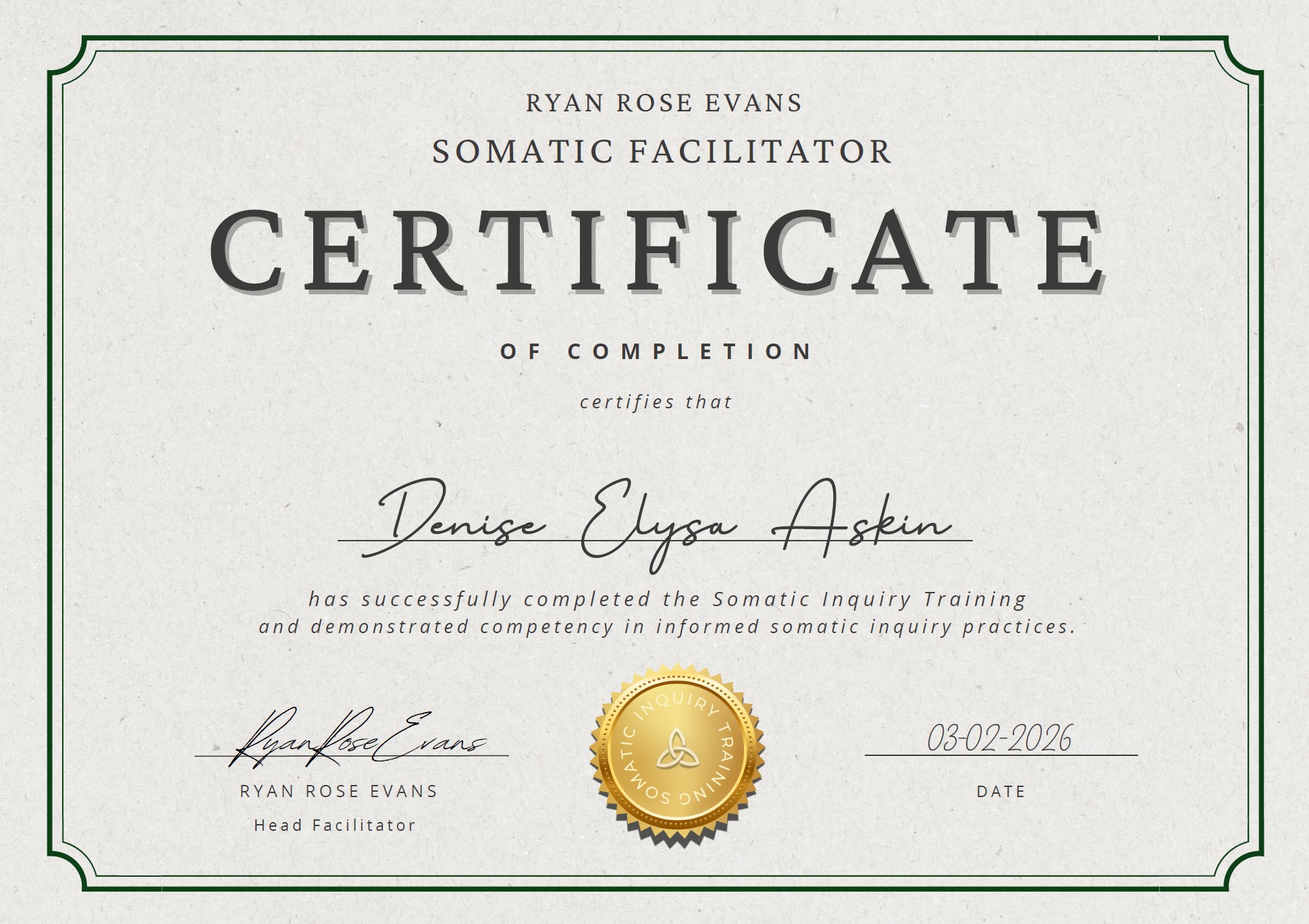
That is exactly the conversation Denise Elysa, somatic inquiry practitioner and intuitive energy healer; host of the EmbodiedSoul Community App and the Coming Home to Ourselves Podcast, sat down to have with Sharon Pendlington, a certified hormone health and stress resilience coach with a decade of clinical experience supporting women through the menopause transition. What unfolded was a conversation that held the complexity of this life stage with genuine reverence, and challenged some deeply held assumptions about what menopause is and what it is for.

This conversation happened live inside of the EmbodiedSoul with Denise Elysa Community, exclusively for members. The full length extended deep dive is also available to members inside of the community as a replay, and the free public version is now available on all major listening platforms through the Coming Home to Ourselves with Denise Elysa Podcast.
Menopause Symptoms as Body Signals: What Your Hormones Are Trying to Communicate
Sharon opened by naming something that tends to get glossed over in mainstream menopause wellness discourse. Many women move through this transition without significant complaints. The medical model, by design, focuses on what is wrong, and the menopause conversation has followed that same pattern, which means the women who are struggling hear a lot about what their bodies are failing to do, and not much about what their bodies might be trying to say.
Denise brought in her own perspective here, one she regularly explores with the people she works with both one-on-one and inside her private community. She described how she had been talking with her mother-in-law before the recording and reflecting on hot flashes through a somatic and energetic lens. From that perspective, heat in the body is often connected to repressed anger. And she observed that many women arrive at menopause having spent decades living outside of alignment with themselves, managing everyone else’s needs, suppressing what was inconvenient, and carrying survival mechanisms that were once necessary but have long since stopped serving them.
When those women begin, consciously or not, to shift that pattern, set new boundaries and reclaim a renewed sense of self, the body starts to metabolise what was left unprocessed. That metabolising can present as physical perimenopause symptoms. Sharon reflected that she had never heard it framed quite that way, and found it resonant with what she witnesses clinically. Hot flashes, she explained, are neurological, they are a stress response. In the full interview, Denise and Sharon discuss in more depth how incomplete stress responses live in the body until they are given a chance to complete.
Sharon described how wild animals shake off a stress response immediately after a threat has passed while humans do not. Humans, unless they have gone through a significant process of unlearning their earliest conditioning, tend to hold it and push it down. When this happens, that survival energy remains in the system waiting for its opportunity to complete and often getting louder and louder the longer it waits.
Is Chronic Stress Making Your Perimenopause Symptoms Worse?
One of the most grounding parts of this conversation was Sharon’s explanation of how nervous system regulation directly regulates hormone production. The adrenal glands are meant to produce a backup supply of hormones as ovarian production declines during perimenopause, but only if those adrenals are not already busy making cortisol. Cortisol is the body’s survival hormone. When chronic stress is present, the adrenals prioritise it and reproductive hormones become secondary.
This means that a woman entering perimenopause already depleted, living in a persistent stress response, and/or disconnected from her body’s signals, is navigating hormonal change with very little reserve. Sharon speaks very directly about this in the interview, and shares that in her decade of clinical work, she has encountered only two patients with reasonably normal adrenal function while the rest were running on depleted reserves.
The full extended conversation, available inside the EmbodiedSoul with Denise Elysa Community App, goes deeper into the specifics of adrenal support, how to begin recognising your own stress response patterns, and the layered connection between nervous system capacity and hormonal health. If you’re curious to learn more, or if this is something that you or a loved one needs some support with, feel free to explore the free podcast episode on the Coming Home to Ourselves with Denise Elysa Podcast, or plunge into the full deep dive extended interview inside of the EmbodiedSoul with Denise Elysa Community. In addition to the over $1000 worth of resources, workshops, guided practices and other live events, members have free access to future live guest speakers, the opportunity to join as an audience member during the live recording and send in questions both during the recording and in advance for the guest. We would love to have you!
Why Foundational Support Matters Alongside HRT
Sharon was clear that she is not anti-HRT (Hormone Replacement Therapy). She takes it herself and believes most women deserve a thoughtful conversation with their care provider about menopause care and what is appropriate for them, particularly given what is now understood about HRT’s role in bone health, cognition, and cardiovascular protection. However, she is concerned that the conversation has narrowed to the point where the medication is being offered without the foundational layers that holistic menopause support can offer.
She shared her own experience as an example. Sharon went nearly twenty years without sleeping properly, running on cortisol, wearing her sleeplessness, like a badge of honour. What eventually shifted things was not a supplement or a prescription. It was recognising that a deep need to control, developed in childhood as a survival tool, was driving her nervous system to stay vigilant all night. When she addressed that, her sleep changed, as did her relationships, parenting, and sense of self.
If she had taken a sleep aid instead, she would have addressed the perimenopause symptom but missed the menopause body signal entirely.
Denise has worked with this same thread for years, and talks about it often with her one-on-one clients and inside community spaces like EmbodiedSoul. When the body speaks through a symptom, and you silence the symptom without investigating what is underneath, the message tends to find another way out, often through louder and more disruptive ways.
Why Community Support Is Essential for Women Navigating the Menopause Transition
Both Denise and Sharon spoke about the role of community support in helping women through this transition. Denise was honest that the people closest to her do not always speak the same language she does. She needs spaces where she can show up as herself and be understood without having to translate her soul. Sharon reflected that every truly transformative shift in her own life has happened in a small group context, often because of what she learned from other participants, not just from facilitators.
That kind of witnessing, where someone names what they are experiencing and hears another person say “me too,” is not a small thing. It is integral to how healing, as well as adapting through the menopause transition, actually happens in holistic care.
The EmbodiedSoul Community App exists for exactly that reason. It is where Denise hosts deeper conversations, extended podcast content, live sessions, and a community of women doing this work in real time. The full version of this episode lives there, venturing into territory that this shorter version doesn’t have time to cover.
An Invitation to Listen to What Your Body Is Saying
This conversation was not a tidy prescription for navigating menopause. It was something closer to an invitation; to slow down, listen inward, and consider that menopause symptoms may be body signals that have more purpose than the medical model alone can account for. Sharon carries a decade of clinical insight and her own lived experience through this transition. Denise brings somatic and energetic depth along with an embodied understanding of symptoms as messengers. Together they offered something that is more difficult to find in mainstream menopause spaces: a conversation built on respect for the whole woman and the stories and imprints her body carries, rather than just treating her medically.
Frequently Asked Questions
1) Can menopause symptoms really be connected to unprocessed emotions?
Yes, according to what Denise and Sharon explored in this conversation, the body holds incomplete stress responses, and when life circumstances begin to shift, including the internal shift that often happens around menopause, those stored responses can start to surface. Whether you pursue that thread with a somatic practitioner, a nervous system coach, or inside a supported community space, the exploration itself tends to be where the real change begins.
2) What is the connection between the nervous system and menopausal symptoms like hot flashes and sleep disruption?
Sharon explained that hot flashes are neurological, not just hormonal. They are connected to the stress response. The adrenal glands are also responsible for producing backup hormones during the menopause transition, but only when they are not already occupied managing chronic stress. This is why nervous system support is not a nice-to-have addition to menopause care, for many women, it is one of the most important parts.
3) Does this mean HRT is not worth considering?
Sharon openly shares that she takes HRT herself and supports women in having that conversation with their doctors. The concern she raises is not about taking hormone replacement therapy, but about over-relying on it without addressing what is happening underneath. Medication can manage symptoms but does not always resolve the root. This doesn’t mean that there isn’t value in the support that medication can offer in the right circumstances, however, Sharon and Denise’s dialogue brings more depth to this common narrative.
4) Where can I access the full extended version of this conversation?
The full extended episode is available inside the EmbodiedSoul with Denise Elysa Community App. Members get access to deeper conversations, extended recordings, live sessions and a community of people doing this work alongside them. You can find more information and join at deniseelysa.com.
In addition to the over $1000 worth of resources, workshops, guided practices and other live events, members have free access to future live guest speakers, the opportunity to join as an audience member during the live recording and send in questions both during the recording and in advance for the guest. We would love to have you!
5) How can I connect with Sharon Pendlington?
Sharon’s website is sharonpendlington.com, where you can find information about her 90-day Nervous System Reset program and her perimenopause archetype quiz, which is a gentle starting point for understanding how your symptoms may be showing up and what they might be pointing to.
Resources to Support You
If you’re tired of piecing together different practices that don’t support one another, or feel drawn to connect with a practitioner or other like-minded people who are working towards a similar goal of inner-healing more intentionally, Denise Elysa has various resources to support you.
EmbodiedSoul with Denise Elysa Community
The EmbodiedSoul with Denise Elysa Community is a desktop and mobile-friendly web app and community platform. Inside you’ll have instant access to over $1000 worth of on-demand guided practices, workshops, ceremonies, meditations and more. Additionally, Denise hosts 2-3 live events per month for community members. These events are free to members and consist of Live Guest Experts, Live Connection Calls, The Seasonal Pause: Equinox & Solstice Ceremonies, Live Energy Healing Sessions, Guided Practices and more.
Explore more about what you can access inside the community.
Read some of the FAQ and other details.
Work with Denise
Denise offer a few different ways of working with me depending on your individual needs and commitment levels. Explore how to work with me.
Live Events
Each month inside of the EmbodiedSoul with Denise Elysa Community, Denise hosts approx. 2-3 live events for members. These events include live guest experts, live connection calls, group energy healing sessions, guided practices, workshops and more. Each event is free for members, pre-registration is required.
Free Resources
Somatic Healing for Chronic Symptoms
How do we take what we learn about somatic inquiry, somatic healing, and somatic parts work and actually apply them in real time when we’re experiencing symptoms that, quite reasonably, feel scary? This free lesson will walk you through the experience. If you don’t already have an account to access this free lesson, you can create one here. You will need to be logged in to access it.
The Podcast
The first Sunday of every month, a new podcast episode releases on the Coming Home to Ourselves with Denise Elysa Podcast. Available on web browser, Spotify, YouTube, Apple Music and Amazon Music.