If you have ever found yourself curious about energy healing and then immediately second-guessed that curiosity, you are not alone. Questions like “is this real?” and “how would this even work?” are reasonable to consider. Just as you would for trying anything new, a little bit of research or general understanding of what to expect doesn’t hurt.
This post is an attempt to offer a grounded, accessible explanation of what energy healing actually is, what the research says (and where it is still limited), what an energy healing session can look like in practice, and how energy healing differs from somatic work. Whether you are completely new to this or have been circling it for a while without quite knowing what to make of it, this is written for you.
What Energy Healing Is
Energy healing is a broad term for practices that work with the body’s energetic or biofield layer, the subtle field of energy that is understood to exist within and around the physical body. The premise is that this field can become blocked, congested, or imbalanced through stress, illness, trauma, or accumulated life experience, and that working intentionally with it can support the body’s own capacity to find greater balance and ease.
This is not a new idea. Across many cultures and centuries, healing traditions have worked with this layer under different names. In Traditional Chinese Medicine it is called Qi. Ayurvedic traditions call it prana. Indigenous and shamanic traditions around the world have their own frameworks for the same underlying understanding: that the human body is not only physical, and that healing can occur on more than one level.
What makes contemporary energy healing modalities distinct is that many of them have been formalized into teachable, repeatable practices, some of which have been studied in clinical and research settings. This doesn’t mean the evidence is settled, but it does mean the conversation has moved well beyond the purely anecdotal. More on that shortly.
It is also important to understand what energy healing is not. It’s not a replacement for medical care, doesn’t require a specific belief system to receive and it doesn’t come with guarantees of any particular outcome. A practitioner who is working with integrity will be clear about these things, in alignment with whichever modality or practices they are working with.
Energy Healing vs. Somatic Healing: Understanding the Difference
These two modalities are sometimes thought to be interchangeable, however, while they can complement each other beautifully, they are not the same thing.
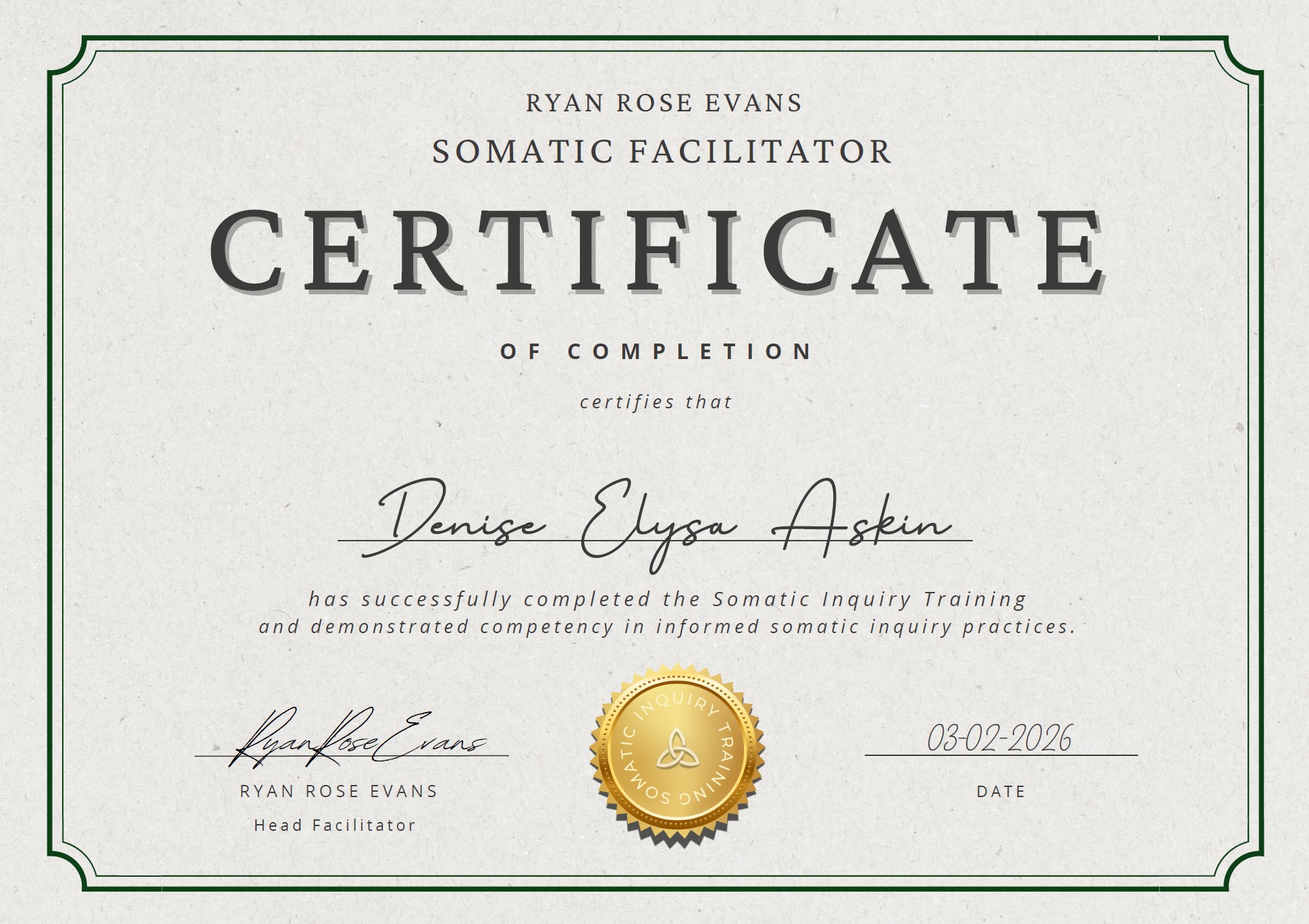
Somatic healing works with the nervous system and the felt sense of the body. The word “somatic” comes from the Greek word for body, and somatic approaches are grounded in the understanding that experience, including trauma and stress, is held in the body and can be accessed through body awareness, sensation, and inquiry. Somatic Experiencing, for example, is a specific trademarked modality focused on releasing trauma held in the nervous system through sensation and pendulation between states. Somatic inquiry and somatic parts work operate in similar territory, guiding a person into direct awareness of what is arising in their body, though they operate under a different training structure. Somatic movement is distinct from both, working primarily through physical movement and gesture as the access point into the body.
These approaches are not interchangeable on their own, though many practitioners hold training in more than one area and may blend them. Some certifications also cover multiple types of somatic practice within a single training pathway.
In a somatic session of the type Denise practices, the person receiving the work is an active participant. They are being guided into their own system, noticing what arises, and engaging with it directly. The practitioner holds a significant role throughout: tracking the nervous system, reading what is present in the body, and guiding the process in real time while the person’s own system leads the way.
Energy healing works differently. When a practitioner is doing energy work, they are the one doing the active work while the person receiving rests and allows themselves to be held. This doesn’t mean the recipient is passive in any meaningful sense; receiving is its own form of presence. But the character of participation looks quite different from somatic work, where the guest is in active, guided inquiry throughout.
Both approaches can access deep layers of healing, arriving there through different doors.
Denise works with both, often in the same session, because together they can offer something more holistic than either does alone. More on how that actually works below.
What the Research Says
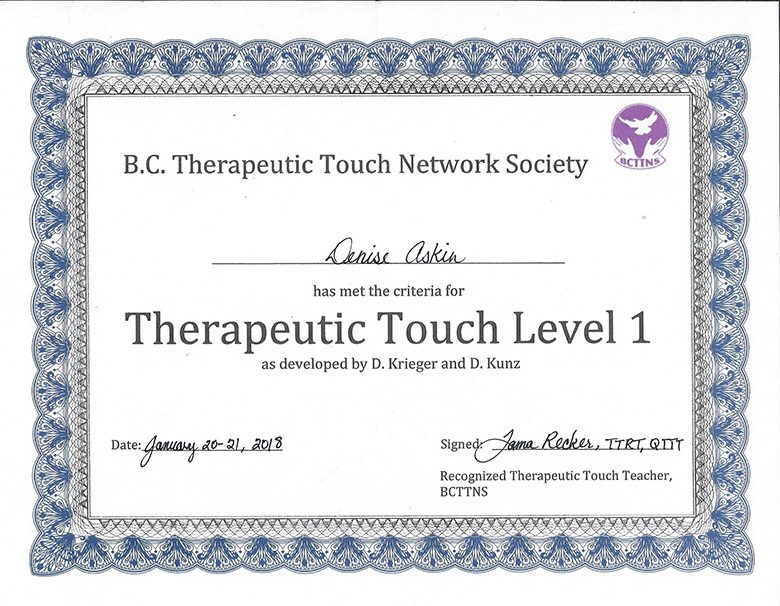
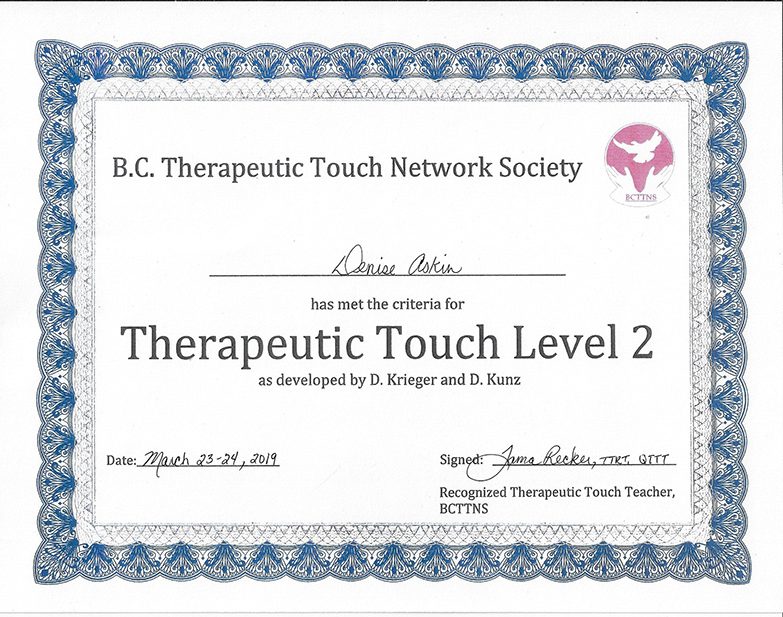
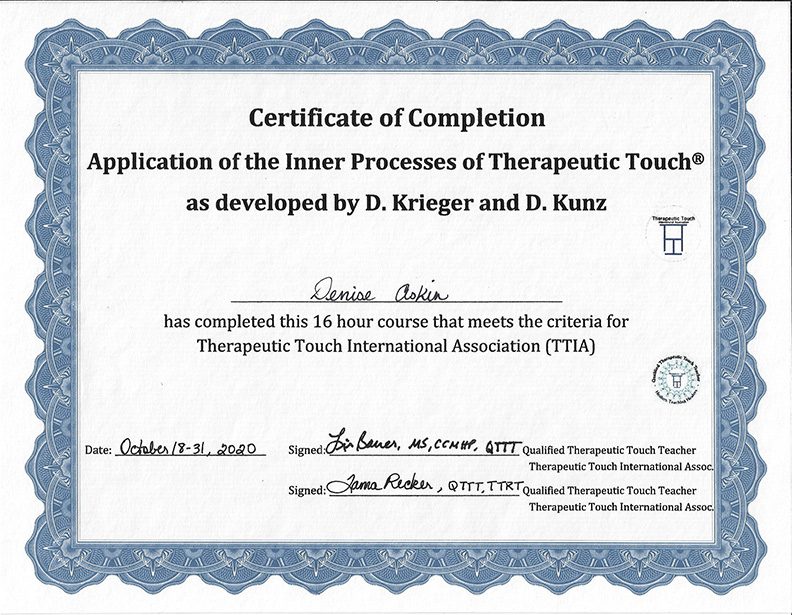
Therapeutic Touch, one of the most well-studied energy healing modalities and the formal foundation of Denise’s energy healing practice, was developed in the early 1970s by Dolores Krieger, PhD, RN, a professor of nursing at New York University, and Dora Kunz, a natural healer. It arose from their observation of healing practices in clinical settings and was originally taught within nursing education at NYU. It has since been practiced in hospitals and clinical settings across North America and is categorized as a biofield energy therapy by the National Center for Complementary and Integrative Health (NCCIH).
The research into Therapeutic Touch and biofield therapies more broadly is growing and still mixed. A 2025 scoping review published in the Journal of Integrative and Complementary Medicine examined 353 peer-reviewed studies across biofield therapies including Reiki, Therapeutic Touch, and Healing Touch. Nearly half of the studies reported positive results.
A systematic review of 66 clinical studies published in the International Journal of Behavioral Medicine found strong evidence for biofield therapies reducing pain intensity in pain populations, and moderate evidence for reducing anxiety in hospitalized patients.
At the same time, study quality across this body of research is variable. A 2021 rapid evidence assessment of Therapeutic Touch specifically, published in Nursing Open, found that while 18 of 21 recent studies reported positive outcomes, only 4 had low risk of bias. The authors’ conclusion was not that the therapy doesn’t work, but that the studies themselves have methodological limitations that make strong conclusions difficult.
The transparent picture is this: there is a meaningful body of research suggesting that biofield therapies support relaxation, reduce pain, and ease anxiety, particularly in clinical populations. The mechanisms behind these effects are still being studied. For people navigating chronic illness, complex symptoms, or a nervous system that has been under sustained pressure, the emerging research offers something worth paying attention to, even while more rigorous study continues.
What Actually Happens in an Energy Healing Session
This is often where the practical questions live. What is actually going on? What does a person do? What does the practitioner do?
Denise works virtually with her general clients, which means sessions happen over video call from wherever each person is. The guest finds a comfortable position, usually lying down or sitting, and settles in. Before the work begins, Denise opens the energetic space: she sets intentions for the session, establishes energetic protections, and prepares the field they will be working in.
This is not a formality. It is a safety practice, both for the guest and for herself, and it is something she does with care at the start of every session. At the close, she intentionally ends the energetic session and cuts cords, again for the protection of everyone involved.
What happens in between varies significantly from session to session, which is one of the things that makes Denise’s approach distinctive. Sessions can include some combination of grounding, meditation, energy healing, somatic inquiry, movement practices, oracle card reading, pendulum work, and channeling, depending entirely on what the guest needs that day.
When the work is energy healing or meditation-focused, the guest is resting and receiving. Denise is doing the active work, and she will often narrate some of what she is sensing or seeing, though this narration is offered as additional support rather than required for the work to land.
When somatic inquiry or movement is incorporated, the character of the session shifts. The guest becomes an active participant, guided into their own system, and Denise is no longer doing the work on their behalf; she is guiding them into their own experience. This is the same distinction described above, and it can happen within a single session as the work naturally moves and deepens.
Sessions can be planned in advance, particularly for guests who have a clear intention, a specific comfort level, or who are returning for continued work and have already established what they want to explore next. They can also unfold responsively, shaped by what the guest brings when they arrive that day, including something physical, emotional, or what is present in their nervous system in that moment. Denise is reading and adapting to the energetic field and the nervous system in real time, which means the session finds its own shape.
How Denise Works: Therapeutic Touch, Somatic Inquiry, Intuitive Gifts, and Lived Experience
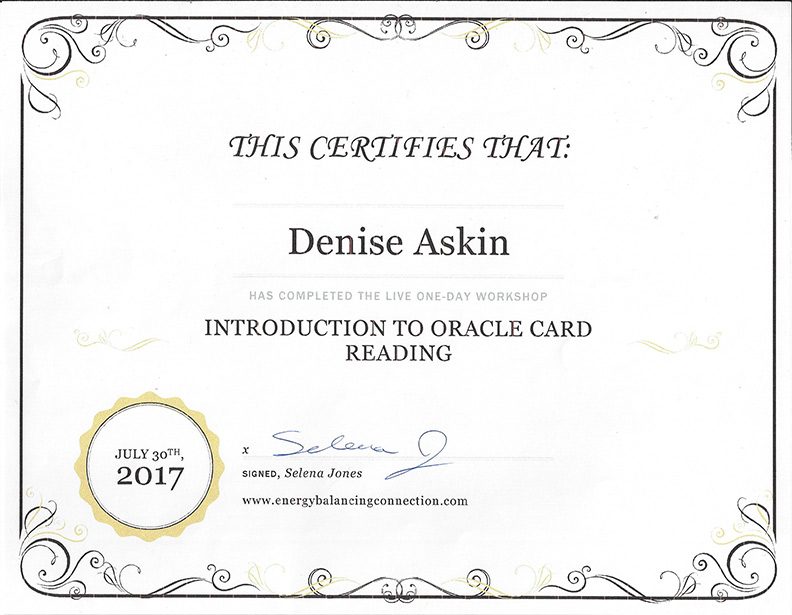
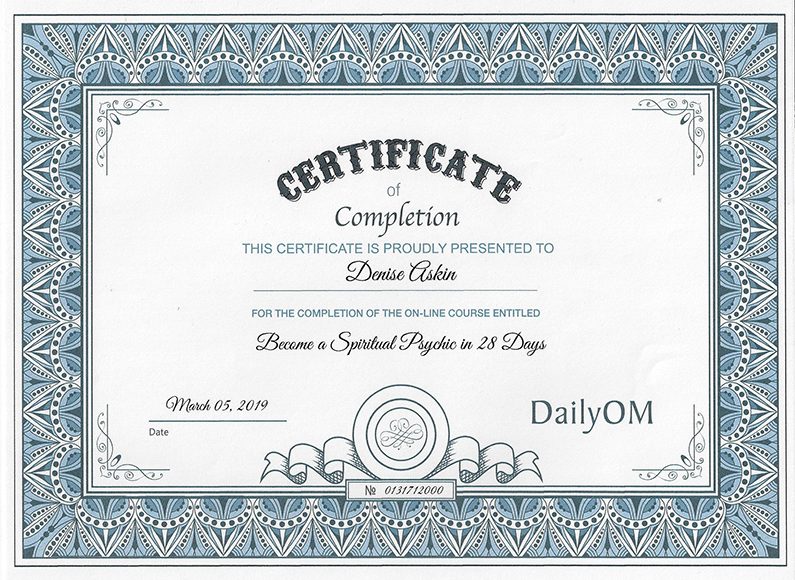
Denise’s energy healing practice is rooted in Therapeutic Touch as its formal foundation, though it extends well beyond the specific parameters of that modality, through additional training, years of practice, and intuitive gifts that have been part of her life since early childhood.
Those gifts emerged when she was very young. They frightened her, and for a time she tried to close them off. It was through training as an adult, including her Therapeutic Touch training and other intuitive and healing modalities, that she learned how to work with energy safely, to allow her gifts to re-open, and to develop them with care, integrity, and ethical grounding.
Her work draws on all of the clairs: clairsentience (clear feeling), claircognizance (clear knowing), clairvoyance (clear seeing), clairaudience (clear hearing), clairempathy (the felt sense of another’s emotional experience), clairintellect (clear knowing through intellectual or conceptual channels), clairtangency (clear sensing through touch), clairsalience (clear smelling), and clairgustance (clear tasting). Her work leans most heavily on clairsentience, claircognizance, clairvoyance, clairaudience, and clairempathy, with the others present and available but less dominant. Many people are surprised to learn how many of these distinct intuitive channels exist, and how interconnected they are in practice.
Denise holds that these capacities exist in everyone to some degree. She does not consider herself exceptional for having them. What she has done is practice, train, and learn how to work with them in ways that are safe, ethical, and genuinely supportive for both herself and the guests that choose to work with her.
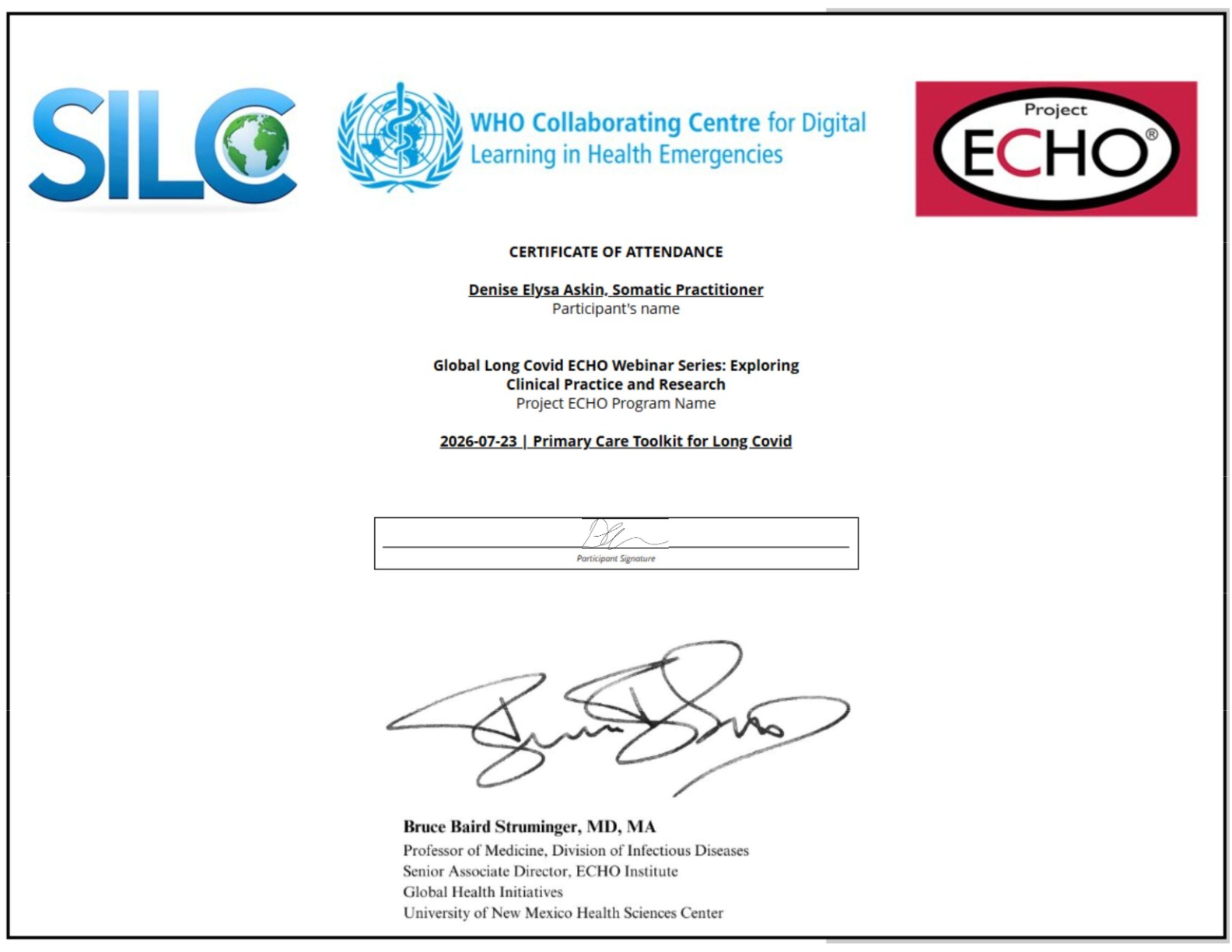
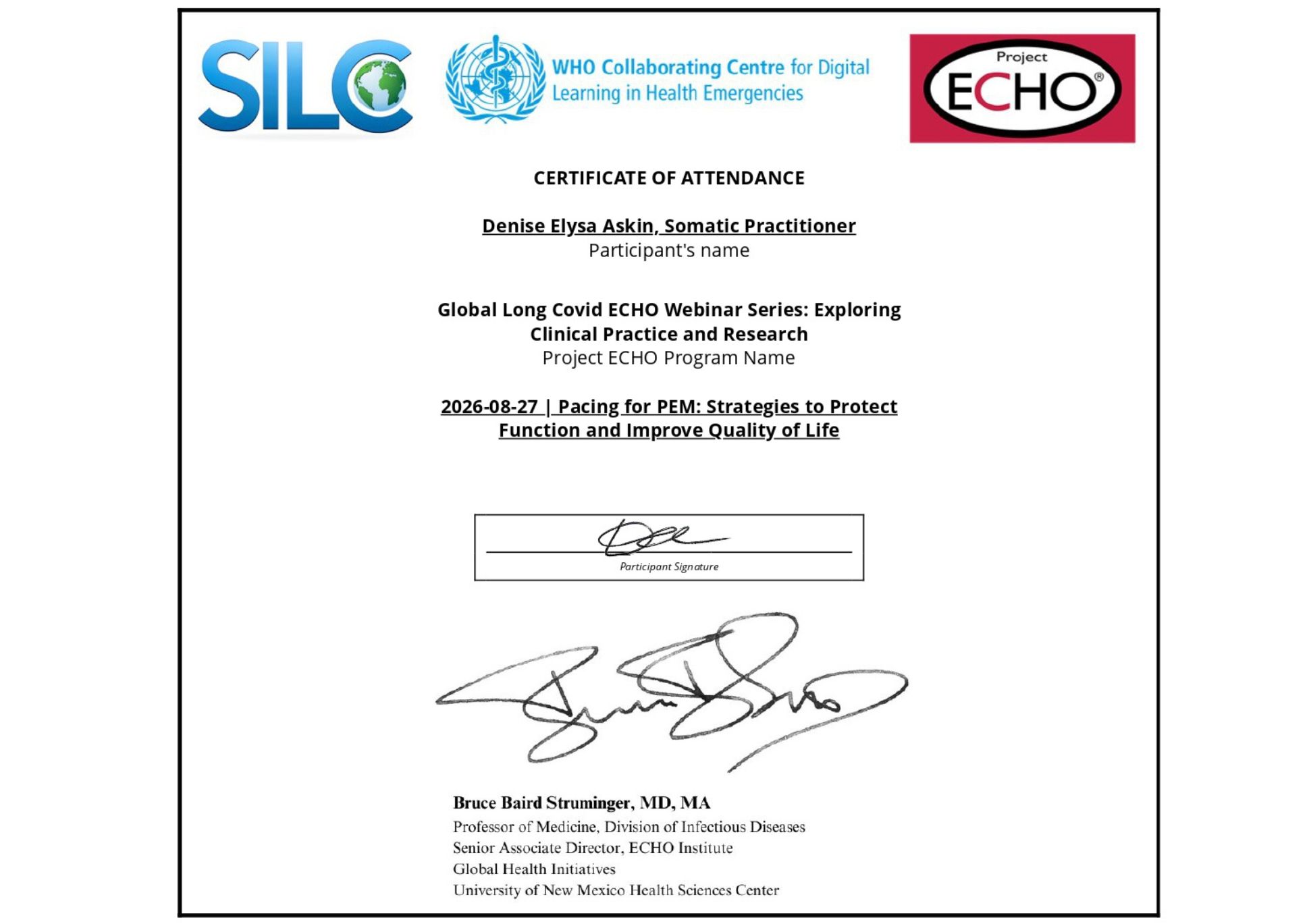
Her lived experience navigating complex chronic illness and both big T and little t trauma has shaped her practice in ways that would be difficult to overstate. It opened her work to layers it might not otherwise have reached, particularly around safety for highly sensitized systems, and it is part of what makes the space she holds recognizable to people who are exhausted, medically complex, or who have spent years feeling unseen by conventional frameworks. She also co-facilitates a meditation and energy healing series for patients of two Internal Medicine Specialists at the BC-CLMF, work that began in 2024 and reflects the range of settings her practice now spans.
Her work has been recognized and recommended by experts and medical professionals across different fields. Those recommendations can be read on her Experts & Medical Professionals Recommendations page.
To learn more about Denise and the path that brought her to this work, visit her About page.
What People Report Experiencing
Experiences in energy healing vary widely, and Denise is clear that no particular outcome can be promised or predicted. What people report is offered here as genuine and meaningful, not as a list of guaranteed results.
Commonly, people notice a settling in the nervous system, a quality of rest that feels different from ordinary relaxation. Some experience emotional release: tears that arrive without a clear story, a heaviness that lifts, something old that finds a way to move through. Others describe a sense of clarity, or a shift in how a particular thing feels in their body. Some simply feel held in a way that is hard to put words to.
There are also sessions where nothing dramatic happens, and this is not a sign that nothing occurred. The body processes in its own time and in its own way, and sometimes the effects of a session settle in over the hours or days that follow rather than in the session itself.
What becomes possible over time, for those who engage with this work consistently and integrate it beyond the session itself, is often something larger than symptom relief. People report identity shifts, a different relationship with their own boundaries, healthier dynamics in their relationships, a more connected and grounded sense of self. Some describe simply moving through the world differently, as though something that was previously fixed has rearranged itself.
How much of this becomes available depends on a number of things: what someone is using the work for, how deeply they engage with it, and how much they bring it into their daily life between sessions. Someone using energy healing primarily for pain management will have a different experience than someone doing sustained transformation work across both somatic and energetic layers. These modalities can be incredibly supportive either way. How someone chooses to work with them will depend on their circumstances, their capacity, and what they are hoping for.
Manifestation tends to show up in this territory too. As people do this work and integrate it, what they have been calling in, whether that is the right housing situation, healthier relationships, more balance, a deeper sense of inner harmony, or something else they’ve been working to manifest, often begins to show up in their physical reality. For those who want to explore this piece specifically, the Embodied Manifesting Foundations workshop inside the EmbodiedSoul community is a good place to start.
If you are curious about what others have experienced working with Denise, her testimonials page offers a range of perspectives in people’s own words.
How to Find an Energy Practitioner Who Is Right for You
If this post has stirred something and you are beginning to consider working with an energy practitioner, know that there is no need to move quickly and that often your own intuition can be the best guide for who is the right fit for you.
There are some questions worth asking before you commit to working with anyone: about training, ethics, scope of practice, how they handle their own safety and yours, and whether their approach actually fits what you are looking for.
How to Choose a Somatic Practitioner or Intuitive Energy Healer Who Is Actually Right for You explores what to look for, what to be cautious of, and the questions that you may want to consider asking before you begin.
Explore the EmbodiedSoul Community
If you are looking for an accessible way to experience energy healing, somatic practices, and nervous system support alongside a community of people navigating similar terrain, the EmbodiedSoul with Denise Elysa Community may be worth exploring.
Members have access to a growing library of on-demand guided practices, workshops, ceremonies, meditations, and energetic transmissions, as well as approximately two to three live events each month including group energy healing sessions, live guest experts, connection calls, and the quarterly Seasonal Pause ceremonies at the solstices and equinoxes. Membership is $67 CAD per month with no minimum commitment.
If you would like to explore deeper 1:1 work, the Bridge to Embodiment is Denise’s signature program. New spaces open as people complete their time with her.
Frequently Asked Questions
What is the difference between energy healing and Reiki?
Reiki is one specific energy healing modality, developed in Japan in the early twentieth century, that works with life force energy channeled through the practitioner’s hands. Energy healing is a broader term that encompasses many different modalities, including Reiki, Therapeutic Touch, Healing Touch, and others. All Reiki is a form of energy healing, but not all energy healing is Reiki. Different modalities have different frameworks, training pathways, and approaches, though they share the underlying premise of working with the body’s energetic field.
Does energy healing work virtually?
Yes. Many energy healing practitioners, including Denise, work with clients remotely and find that distance does not diminish the work. The biofield is not limited by physical proximity in the way that hands-on bodywork would be. Virtual sessions are Denise’s primary format for working with general clients, and guests regularly report the same quality of experience as they might in person.
Do I need to believe in energy healing for it to work?
You do not need to arrive at a session with belief or certainty. Openness and a willingness to receive are generally enough. The body responds to what it responds to, and many people who came to their first session skeptical have found something meaningful there. That said, if you are genuinely resistant or uncomfortable, it is worth waiting until you feel more ready or considering whether or not it is the right method for you. Your own sense of openness or curiosity does matter, and it’s okay if it doesn’t feel like the right step for you.
Is energy healing safe to receive alongside medical treatment?
Energy healing is a complementary practice, meaning it works alongside conventional medical care rather than in place of it. If you are currently receiving medical treatment for any condition, you do not need to choose between that care and energy healing. It is always worth letting your healthcare providers know about any complementary practices you are incorporating, and a practitioner working with integrity will support you in maintaining your medical care rather than suggesting you replace it.
What is the difference between energy healing and somatic healing?
Somatic healing works primarily with the nervous system through body awareness, sensation, and inquiry. The person receiving is an active participant, guided into their own system. Energy healing works with the biofield, with the practitioner doing the active work while the guest rests and receives. Both can support deep healing and they complement each other well, which is why Denise often blends the two within a single session, adapting to what the guest and their nervous system need that day.
Resources
EmbodiedSoul with Denise Elysa Community The EmbodiedSoul with Denise Elysa Community is a desktop and mobile-friendly web app and community platform. Inside, members have instant access to over $1,000 worth of on-demand guided practices, workshops, ceremonies, meditations, and more. Denise hosts approximately two to three live events per month for community members, including live guest experts, live connection calls, the Seasonal Pause equinox and solstice ceremonies, live energy healing sessions, guided practices, and more. All events are free to members and pre-registration is required. Explore the EmbodiedSoul Community
Work with Denise Denise offers a few different ways of working 1:1 depending on individual needs and commitment levels. Explore how to work with Denise
Meditation and Energy Healing 5-Week Series Originally developed for patients living with complex chronic diseases, this series has also been shown to be supportive for anyone navigating challenging life circumstances or looking to deepen into inner work through meditation, energy healing, and self-exploration. Available inside the EmbodiedSoul Community
Free Resource: Somatic Healing for Chronic Symptoms How to take what is learned about somatic inquiry, somatic healing, and somatic parts work and apply it in real time when experiencing symptoms that feel scary. This free lesson walks through the experience. Note: browse the app at embodiedsoul.passion.io before creating a free account, as creating any account removes the ability to preview other available content. Access the free lesson
Experts & Medical Professionals Recommendations A collection of recommendations from experts and medical professionals who have direct knowledge of Denise’s work. Read the recommendations
The Podcast A new episode of Coming Home to Ourselves with Denise Elysa releases the first Sunday of every month. Available on web browser, Spotify, YouTube, Apple Music, and Amazon Music. Listen now
The Newsletter Free newsletter with energy updates, resources, tools, event invitations, and more. Join the newsletter